
There is an affordability crisis in the US as home prices have skyrocketed in recent years. This coupled with high interest rates has clamped down on the home sales of existing homes. Now the majority of Americans cannot afford to buy a home and Californians cannot afford to sell a home when they move back home.
Median sales price of new homes in the US have jumped by nearly 40% since the pandemic as interest rates crashed and allowed the bottom half of Americans to purchase homes in droves. Prices have fallen since the peak, but with high interest rates and high home prices, sales of existing homes have crashed.
Interest Rates
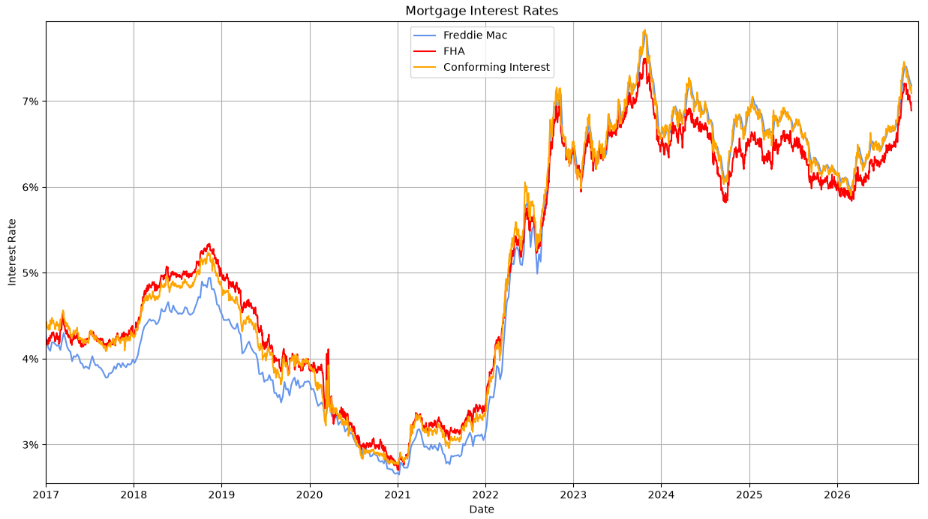
Interest rates dropped like a rock after the pandemic which propped up the economy. They stayed too low for too long as the Fed didn’t have faith the economy would rebound during the Biden administration. By the time the Fed realized inflation was not transitory and the economy had stabilized, it was too late—inflation had taken off. The Fed then jacked up interest rates which has put a damper on home sales. They kept these higher interest rates until they started drastically cutting interest rates in 2024 due to a slowing economy (black vertical line below). Once the Fed did this, the market panicked and interest rates leapt back up. This frightened Powell, and the Fed kept interest rates higher for longer.
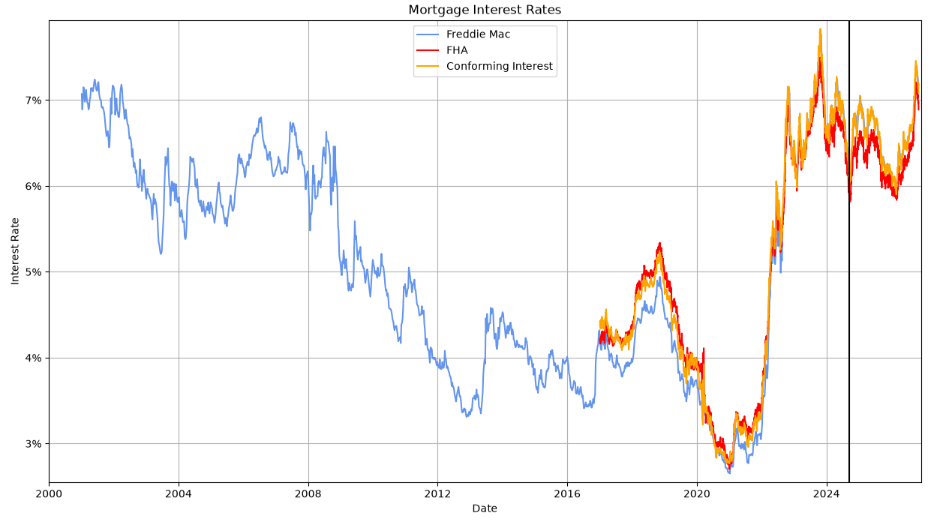
Interest rates are now higher than they were in 2008 which led to a meltdown in the housing market and scuttled the entire economy for years. Some people say that since interest rates were higher in the 1980s, they are low in comparison. That argument is dubious because the economy was different back then. Companies should not rely on “free money”, aka low interest rates, but interest rates are higher than necessary due to fears of inflation.
This leads to higher interest rates on debt—including federal debt, credit card debt, and personal loans—and leaves less money for the average American. This is tragic because 50% of deficit spending is on interest. Lower interest rates will help the government reduce its deficit spending and will help the average American buy a home.
Home Sales Price
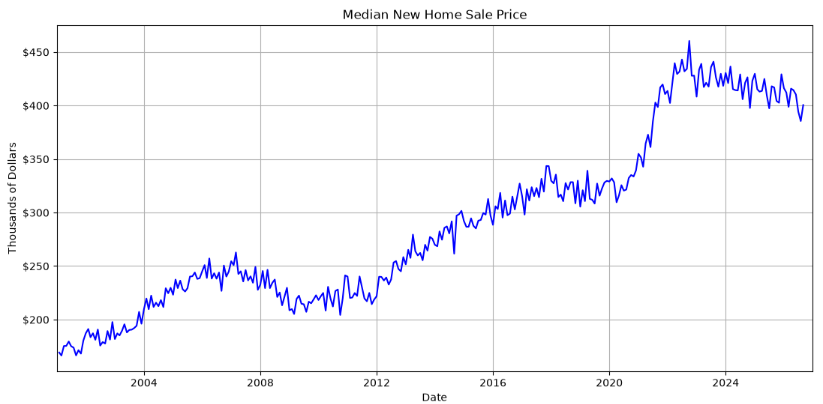
New home prices have remained high which allows builders to keep investing in their inventory and developing the properties they own. Home builders have a business to run and must keep selling homes no matter what. Developers can buy down mortgage rates which allows people to qualify for home loans, they can reduce the margin they make on the home which allows them to sell entire neighborhoods to private equity groups, or they can make smaller homes in higher price areas.
So while property developers have been busy as bees building and selling homes, existing sellers have very limited freedom when selling their home. The average American who is trying to sell their home can do repairs on the home they bought, but ultimately they are at the mercy of the market when buying and selling a property. They can try owner financing, IF they own the home out right. So yes 40% of American homeowners COULD have options but they still have to live somewhere. Not only that, they have to trust the buyer will continue to pay the mortgage and won’t wreck the home if they get evicted. It’s a big risk for your biggest asset.
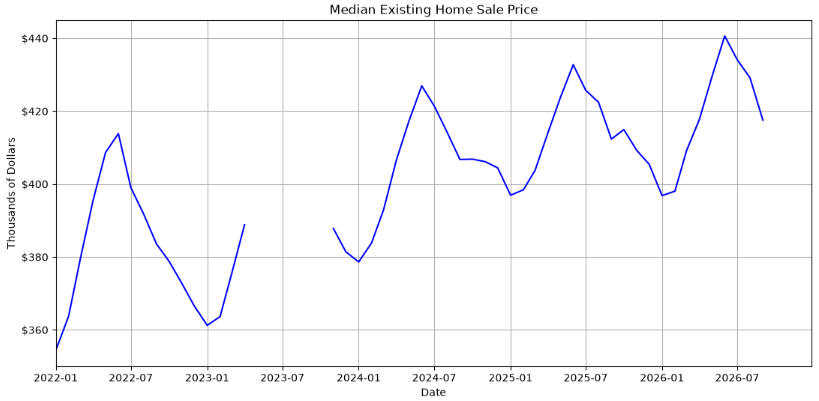
Existing home prices are listed at higher prices than new homes. You read that correctly, existing home prices are higher than new home prices. Also as mentioned before, companies selling new homes have options when selling their homes and existing home owners still want higher prices.
There is missing data in the chart above but it really shows that home owners try to get higher prices in the summer and prices plummet in the winter when the market goes into a deep freeze and homes are taken off the market. The only thing worse than losing money on your biggest investment is holding it for years and selling it at a loss while paying property taxes and maintenance the whole time. I cannot imagine the psychological impact that would have on an investor, let alone a family.
Home Sales
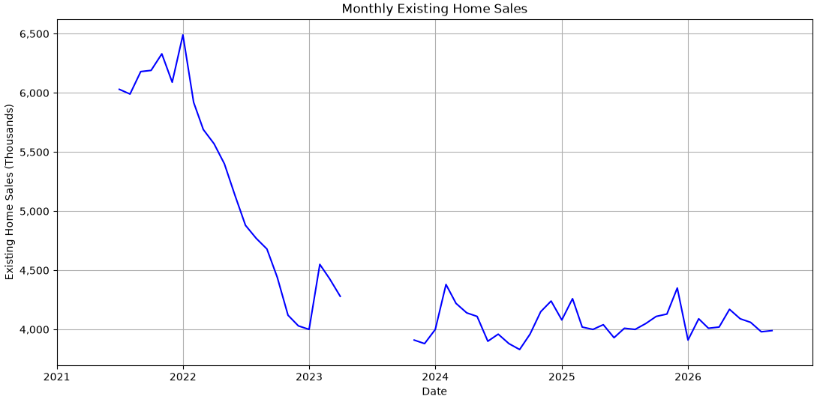
If there were one chart that cost the Republicans the midterms it would be this. Again there is missing data above but existing home sales have plummeted. There are Californians that moved across the country and bought a home in places like Texas for overinflated costs during the pandemic when they could work from home. Then they were recalled back to LA and San Francisco after the pandemic but they still have their home in another state. Now they cannot sell it because they cannot bear to take a loss and the market has decided that interest rates will not come down. Potential home sellers are losing money and letting homes sit empty all while paying property taxes and having to worry about people breaking into the home while they are back in their home state.
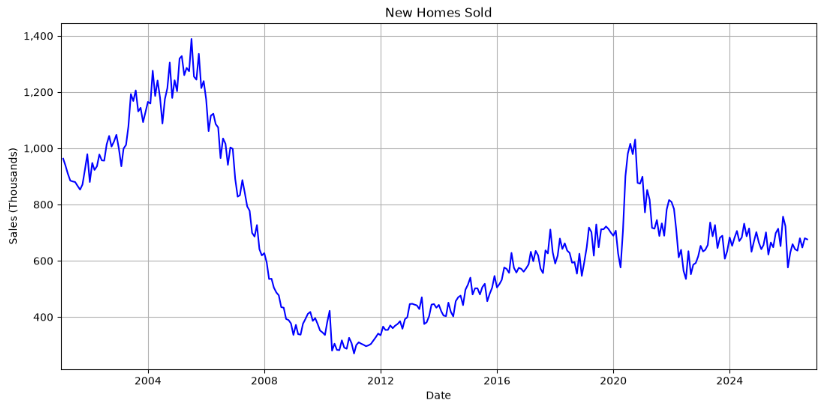
Meanwhile, sales of new home sales are actually doing well. Sales of new homes are not in the stratosphere as they were right after the pandemic, but they are still doing well historically. If we compare pre-pandemic sales with sales today, they are roughly in line. This is a great comparison because the economy was firing on all cylinders before COVID crashed the economy. Meanwhile builders are still making decent margins even while their stock prices suffer.
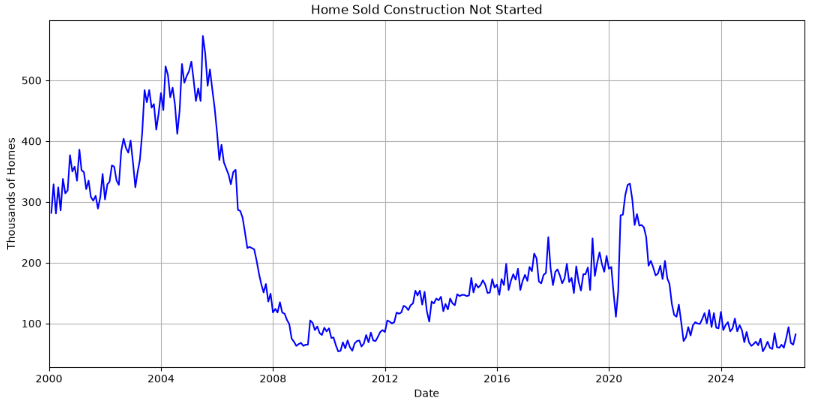
If we break down sales of new homes we can see that new home sales where construction has not yet started has dropped after the frothy market of the pandemic. This decline is a symptom of higher interest rates but it does not spell disaster for home builders as they continue to make money.
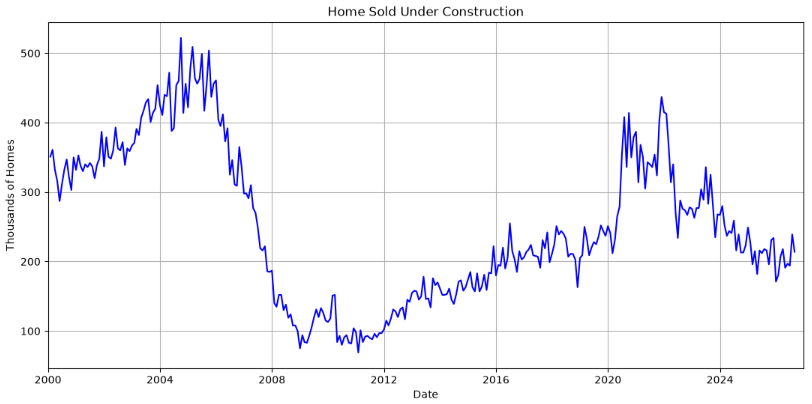
Home sales that are currently under construction are roughly in line with pre-pandemic sales. This shows that the market has essentially gone back to normal at least for sales of new homes under construction.
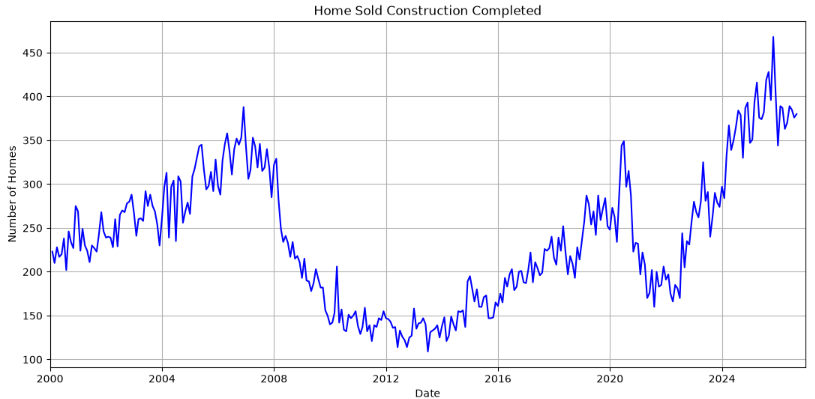
Home sales of completed homes are WAY above pre-pandemic sales. This shows where new home builders are making money and the market is good. Even with the higher population of the US after years of unsustainable immigration home sales of completed new homes are up dramatically. The comeback in interest rates have dampened demand but the sale of completed new homes is still high.
And these are property developers. If the market turns on these companies, as with the recent spike in interest rates, home builders can cut prices to stimulate demand. If they are currently making 15% on each sale, they can cut prices or even sell for a small loss and write the loss off on their taxes. Small sellers cannot always take the same hit at the time when they sell their biggest investment. Imagine a family selling a home for a ($20k) loss and being saddled with debt on an asset they no longer own.
Homes for Sale
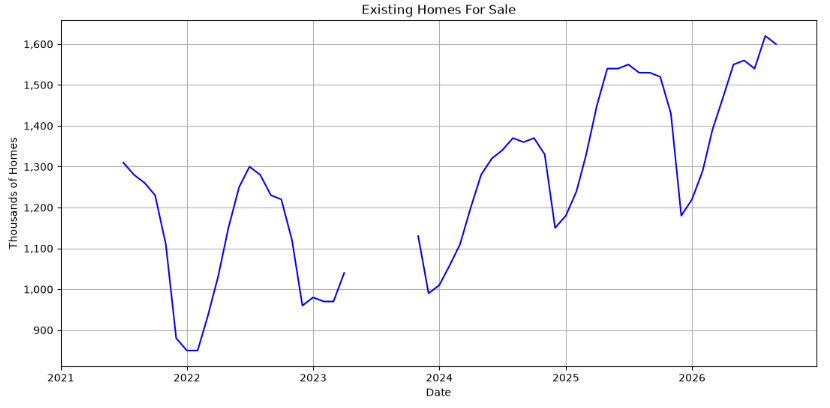
Existing home for sale, minus the missing data, are currently pretty high. Homes for sale will drop as existing home owners will take their homes off the market for sale over the winter and relist them, hopefully for a higher price. Existing home owners will hold these homes over the winter and continue to pay property taxes on these homes. They may even try and rent out the homes but they are not selling these homes.
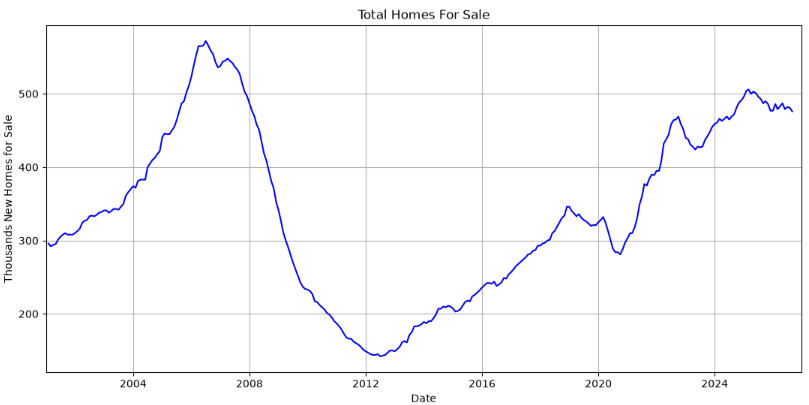
New homes for sale are higher than they should be. Property developers may be fighting for market share or they may be trying to support their falling stock prices. A better explanation would be that total home sales are actually pretty good and builders are just eating the market share of existing home owners. Developers could be dumping homes onto the market and are trying to get every last dollar while they can. We will break down these new homes for sale by category.
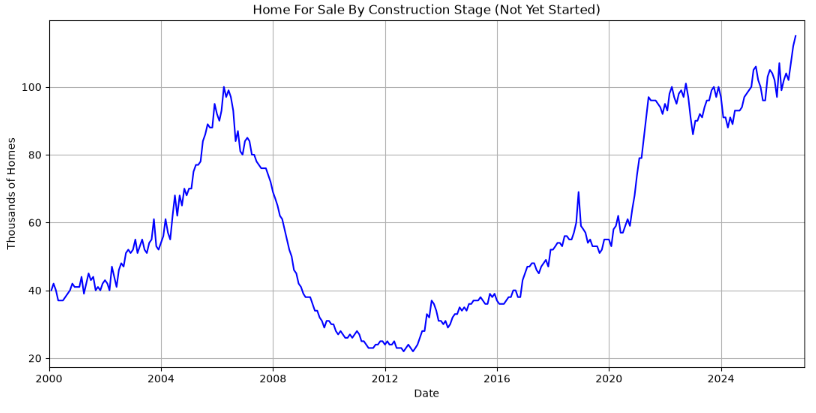
This is the most important graph in this entire article. New homes for sale not yet started are actually OVER the number from before the housing crisis of 2006 that morphed into the financial crisis in 2008. For me-and apparently only for me-I am assuming that home prices will come down on their own. They don’t need the Democrats shifting the economy into low gear or another war in the Middle East to lower home prices. This doesn’t even take into account all the multifamily rental properties across the US.
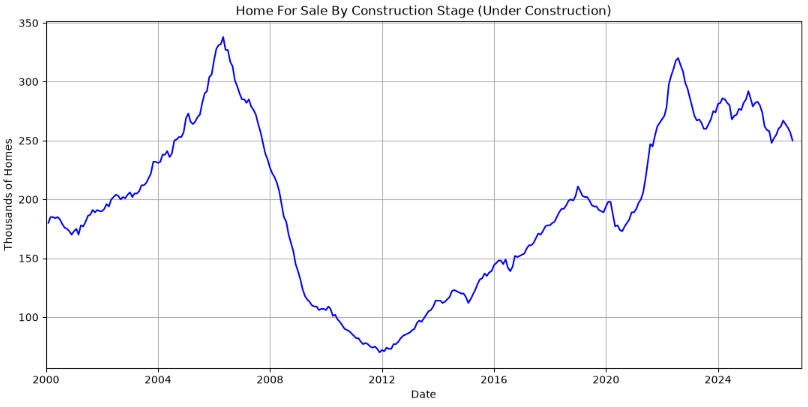
The new homes for sale that are still under construction are sky-high. They may not be in the heliopause but they are still high enough to bring down home prices and meet the demand of a declining population.
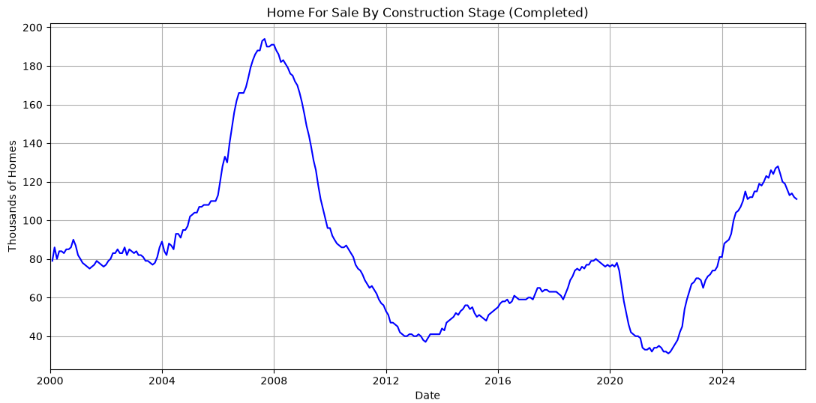
And the pièce de résistance of the Affordability Crisis is completed new homes for sale. These new homes that are for sale are not selling like hotcakes. Developers are struggling to unload new homes they have built and their inventory is backing up. While it has fallen, interest rates are spiking again which will crimp demand in the future. All it takes is high interest rates and a slowdown in the economy and this inventory turns into a loss per home for each home in their inventory. If the economy were to slow, these home builders will have to get real competitive on price or rates which will bring down home prices. All while nearly all existing home owners can’t compete on anything.
With all this information, my question is what does the average American actually want? Do they want lower home prices? I have already seen that movie and its called The Big Short. I don’t think the average American wants another meltdown of the housing market. That was not good for anyone that didn’t star in that movie and the government would have to increase debt dramatically to pull itself out of that hole.
Do they want more liquidity in the market? Lower interest rates would help buyers come out of the woodwork but they could cause inflation to worsen. Now higher oil prices are already adding to inflation worries and interest rates combined with massive US debt are causing havoc to the federal budget as the government shows signs of strain just paying the interest rates on the debt. Interest rates could fall which would open up pent up demand in the housing market and increasing liquidity. But you have to get interest rates down first. Powell and Warsh would love to hear your plan on that.
What if there was a way to slowly deflate the housing market and not crash the economy? People who have purchased a second home or even their primary residence, will have to bear the brunt of lower home prices but once interest rates and demand bounces back drop the market would begin to heal and the value on their home would bounce back with it.
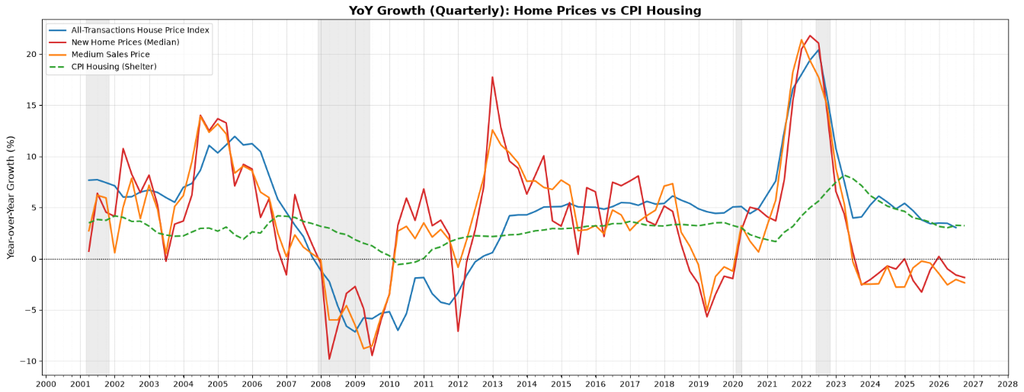
The housing component that has kept inflation high will decline based on the chart above. Home sales price has fallen and it takes time for the CPI Housing component (in green) to decline. Looking above we can see that the green line declines only after home prices have fallen and stay down for a while.
Home prices will also decline with a smaller population. As more people get deported and birth rates do not keep up with inflation, home prices are set to decline. Imagine if they take out 2% of the population per year. That’s 2% less renters and less buyers EVERY YEAR. Now most sellers and renters can hold out for higher prices or better renters but the lowest landlords will have to fight for renters. That will soak up some of the renters which will force some better renters to lower prices or offer 2 months off.
BUT older homes will eventually be taken off the market and that will prop up home prices. Approximately 15% of homes were built in the 1970’s. To put that into perspective that was 50 years ago. Those homes are aging quite rapidly and will need to be torn down in at least 20 years if not sooner.
If the public cannot be patient and does want affordable homes RIGHT NOW you can always continue to build out apartments which will lower home prices as it will be cheaper to rent. You could even put a tax no condemned properties and force sales of dilapidated buildings in order to build more homes or apartments on lots after you tear down abandoned buildings.
If the average American ever decides to elect competent leaders, cities and state governments could always build a fast train from rural America to downtown’s in every major city in the US. That way developers could build out those areas 50 miles away from the city center and be downtown in 10 minutes for work. This would also reduce energy consumption as less people would need to sit in traffic on their 1 hour commute.
Some examples would be building a train from West Virginia to Washington DC, rural Pennsylvania to New York City, Brenham to Houston, or Barstow to LA. This will give people the ability to work higher paying jobs while living in affordable areas. If cities did this, they could also combined their resources and build one large airport to service multiple cities. Imagine if Indianapolis, Cincinnati and Columbus all build a major airport in Dayton and shared the revenue. Then used their land in the airport to build state of the art manufacturing centers.
Or if growing cities like Austin and San Antonio build a high speed train to San Marcos and built a giant airport that would service the growing population of those two cities. You might even be able to walk through the airport unlike Austin Bergstrom. But you have to have competent leaders or you will end up a monument to failure like the San Francisco to LA train.
Point is, there are several ways to get out of this “Affordability Crisis” that everyone keeps talking about. We can be patient adults and just wait for the market to correct itself. We can also put in a plan to fix it but that would take competent leadership at the highest and lowest levels.