
Just a month ago the market was bulletproof. October earnings beat overly optimistic expectations. The economy was at full employment. FDI finally hit bottom. Manufacturing reached all time highs.
The S&P 500 smashed earnings and revenue out of the park in Q3. Analysts kept raising the bar on companies right before earnings were announced but 84% of companies beat the estimates for earnings and 74% beat estimates for revenue. Revenue and earnings for companies were well above the 5-year average indicating that companies were extremely healthy.
Initial unemployment claims fell to a low not seen since 1969, WHEN THE POPULATION WAS MUCH SMALLER THAN IT IS TODAY. Labor force participation among people between the ages of 25 and 54 is near a level not seen since NAFTA and China entered the WTO. Private sector quits were jumping again, continuing unemployment claims were falling again. All this combined means that the labor market was at full employment.
Nothing could stop the freight train.
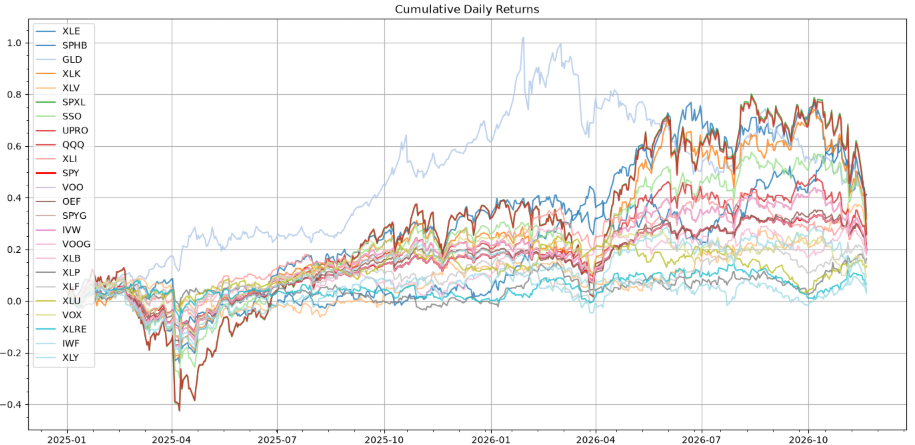
But now the honeymoon is over. The S&P 500 is down over 10%, the QQQ is down 20%, ETFs across almost every single sector are struggling. There doesn’t seem to be a single sector of the economy that isn’t feeling the brunt of this downturn. Even bonds are struggling.
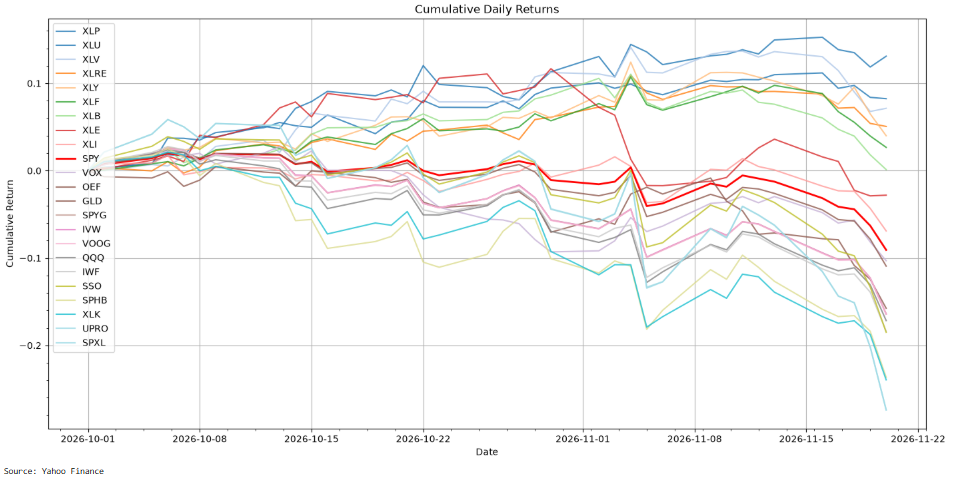
Above is a more detailed look since October. Now a 10% decline from the S&P 500 is not unheard of. During the height of Covid, the S&P 500 fell 33%, during the 2022 downturn the market fell 22%, and during President Trump’s Liberation Day tariffs the market fell 18%. What did all of those declines have in common? They all had a trigger that tipped the market into steep losses. Knowing what triggered these declines will help us understand when the bleeding will stop and the stock market will turn around.
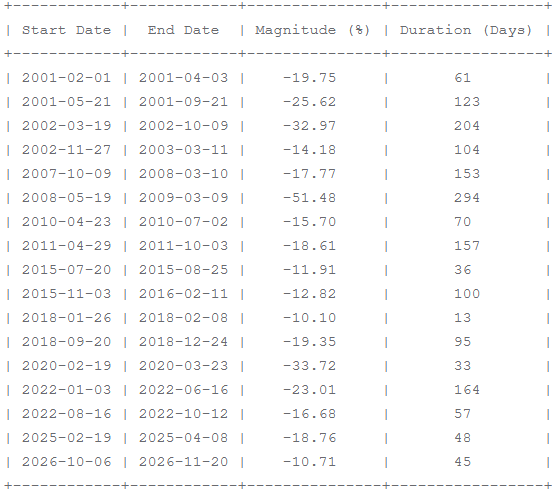
Above are all the S&P 500 declines of more than 10% since 2000. These declines are a very esteemed club and don’t just happen every day. In the early 2000s we saw a dot-com bubble burst which was exacerbated by the formation of NAFTA in the mid 1990s and China’s entry into the WTO in 2001. These trade deals hollowed out US manufacturing and morphed the thriving Mid-West into what became known as the Rust Belt.
The housing market crashed in 2006 but the contagion didn’t really begin spreading across the economy until July 2008. Between the financial crisis and Covid, the economy went through the European sovereign debt crisis, worries about China’s economy after they sucked as much money out of the US as possible, and then the trade war during President Trump’s first term.
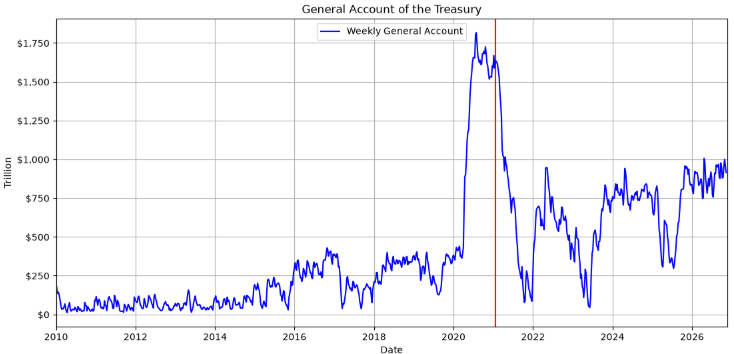
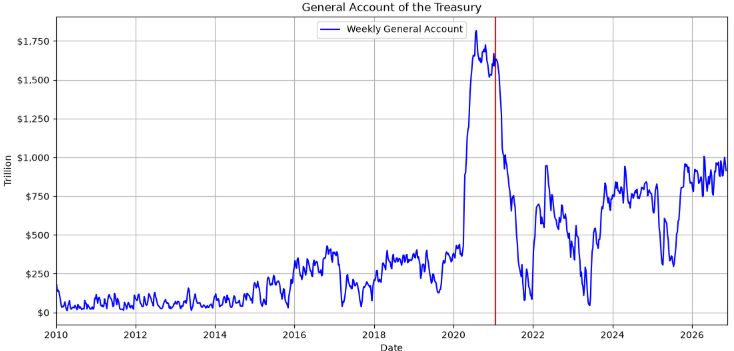
In recent years, the market PANICKED once Covid hit. Apparently shutting down the entire economy for a super flu that was primarily in New York City was not great. The economy eventually reopened and President Trump was pushed out of office. President Biden quickly drew down the Treasury’s cash balance after he took office (red vertical line above) and then the debt started flowing. Inflation hit the economy and the Federal Reserve decided it was time to start fighting inflation. The market panicked and tech companies lost roughly half their value in 2022.
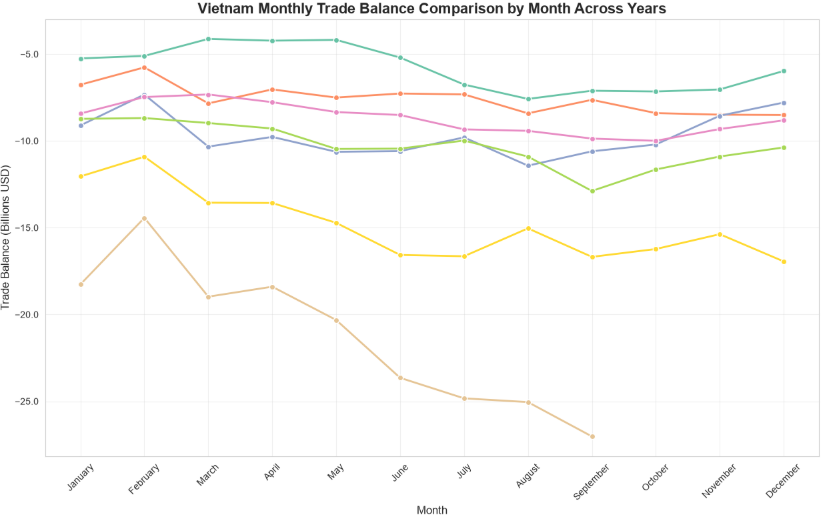
In 2025, President Trump returned to office and resumed the trade war with China. Liberation Day tariffs brought revenue into government coffers while the economy fell nearly 20%. Even now the trade deficit has still not improved and President Trump’s tariffs are in question, China has diverted its goods through Vietnam (see 2026 in brown) to bypass tariffs, and Europe is just waiting out President Trump’s term instead of making a trade deal that may benefit the US in the slightest.
Now we can add 2026 to that list. Financial commentators are saying that the stock market was overdue for a “correction” and that the market was likely to fall. Higher interest rates and a frozen housing market are definitely not helping the overall economy. But why would the market fall in November? Why not months earlier? Why not next month or next year? What was the trigger for the economy to fall? If we know this, we can figure out when the economy may get back on track.
GCC Holdings
We all know that Saudi Arabia and the rest of the Gulf Cooperation Council export huge amounts of oil and gas which allows its population of the countries to live beyond the dreams of the average person. Saudi Arabia’s population of around 20 million people lives a lavish lifestyle due to this massive oil wealth. Kuwait is the next largest country by population with 1.57 million, the UAE has 1.33 million and Qatar comes in at a measly 350k citizens for the whole country.
| Country | Oil exports (million barrels/day) | Natural gas exports (billion m³/year) |
|---|---|---|
| Saudi Arabia | 6.1 | 0 |
| Kuwait | 1.6 | 0 |
| UAE | 2.5 | 27 |
| Qatar | 0.4 | 112 |
Imagine if the US could generate $100 per barrel on net exports of 6 MILLION barrels a day. Multiply that by 365 days a year. And then imagine if there were only 6 million people in total in the country. That would generate approximately $220 billion a year for just 6 million people. It would be difficult to spend that much money domestically, given such a small population. Qatar would be in the same boat. If you valued its 112 billion cubic meters of annual natural gas exports at Dutch TTF prices and divided the resulting revenue among its paltry 350k citizens, the figures would be staggering. With so much wealth being generated relative to their populations, these countries have little choice but to invest their surplus capital abroad. The US is one of the most attractive destinations for that investment.
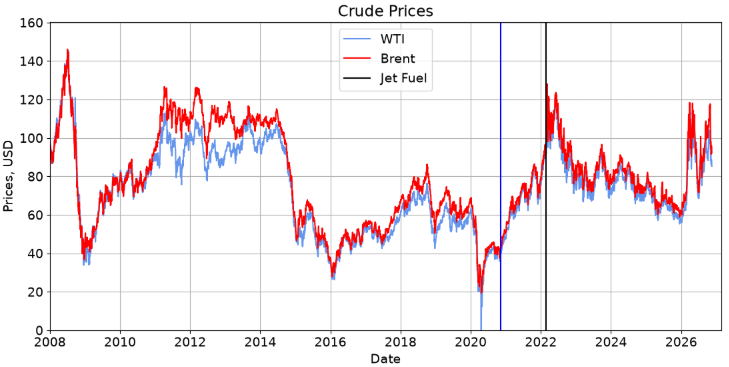
Oil and gas prices swing wildly from year to year. We can see oil prices spiking in 2022 and 2026 above due to the war in the Ukraine and the war with Iran. The governments in the GCC are able to leverage their energy resources to generate higher revenue at a time when economies around the world are struggling financially.
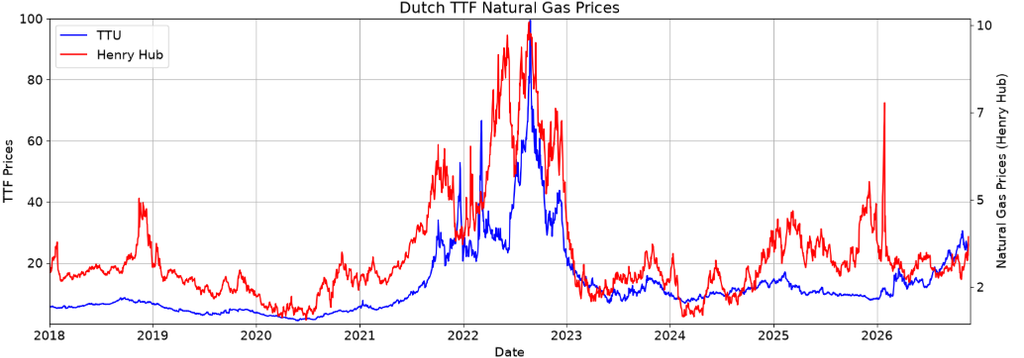
We can see from the spikes in the Dutch TTF on the left axis, which serves as a proxy for European natural gas prices, and the US natural gas benchmark Henry Hub prices on the right axis is just one example of how the Middle Eastern nations have the ability to buy assets all over the world while economies tumbled in 2022. Just imagine the investment opportunities when the tech industry collapsed in 2022 or the Liberation Day tariff financial panic of 2025. With their ability to capitalize on high energy prices, the GCC has continued to make money through market booms and busts. But what happens when the Gulf goes through turmoil of its own?
The current situation is different. The GCC is having to deal with something it hasn’t had to deal with since Saddam invaded Kuwait. Instability. Iran is attacking civilian and military targets throughout Saudi Arabia, the UAE, Kuwait and to a lesser extent Qatar even after the GCC tried to accommodate the current regime in recent years.

The image above shows the oil spill as a result of Iranian proxies attacking Saudi’s East-West pipeline. Iran has been blowing up airports, attacking the East-West pipeline and doing everything it can to attack Saudi Arabia from Iranian territory, Yemeni territory and even leveraging their proxies in Iraq.
The UAE actually helped Iran withstand the economic war the US has been waging on the country for decades as they allowed Iran to evade sanctions. This didn’t save the country from the barrages of attacks of drones and missile attacks from Iran. Iran continued to hit the country to prevent energy exports and when the UAE tried to use its Habshan-Fujairah oil pipeline to bypass the Strait of Hormuz, Iran started attacking that as well to shut down all of their exports. The UAE will have to spend billions of dollars to repair the damages inflicted upon the country by Iran and this is not even counting the loss of confidence many people had when traveling to Dubai or doing business there.
Kuwait has borne the brunt of Iran’s anger toward the GCC after the UAE. They are such a small country and they have been getting hit hard. Qatar’s natural gas field has even been hit by Iranian barrages. This is surprising since they are primarily the ones playing negotiators and trying to resolve the war between the US and Iran. They will likely have to sell assets to cover the cost of new defenses and repairs to their energy infrastructure.
At the peak of the war, the GCC was not able to export energy to the rest of the world. But they had to keep spending to accommodate their populations that have grown accustomed to living lavishly. Plus they are trying to build their militaries from scratch, rebuild the oil and gas infrastructure that has been hit by Iranian missiles and drones and keep their currencies afloat. All with no money coming in. Not easy to do when Iran continues to mine the Strait and vessels have been blowing up like CRAZY lately. Something will have to change and I would assume the GCC would be divesting investments overseas which would crimp demand for the US stock market.
War
Wars are continuing to propagate across the world. These wars could have been the trigger for the recent fall in the stock market. The Russian war in Ukraine is heating up just as winter is approaching with Russia bombing several parts of Ukraine’s infrastructure, with Ukraine in turn bombing several parts of Russia’s energy infrastructure. Also, the war in Iran appears to be heating up as well after a short lull during the US midterms. Iran has been attacking multiple vessels carrying crude in the southern Strait of Hormuz. These daily attacks on vessels have gone unreported in the media but are likely to weigh on the stock market. Also, China’s pending attack on Taiwan would likely crush tech companies as Taiwan is a critical supplier of chips and other technology all around the world.
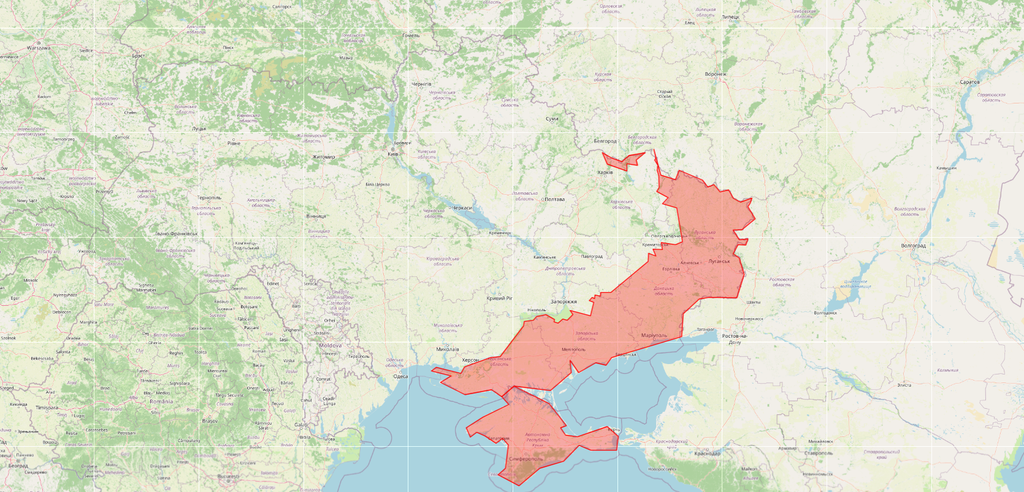
The Russian war in Ukraine has been going on for nearly 5 years. Even with the massive losses on both sides, Russia does not seem to be slowing down anytime soon. Recently, Russia launched one of its biggest attacks throughout the Ukraine and hit multiple targets. Europe finally seems to be standing up to Russia after having supported Russia for so long, at least only in the media. Germany prevented military goods destined for the Ukraine to be moved from its territory at the start of the war and continued to buy massive amounts of Russian energy, fertilizer, minerals and agriculture products.
Some commentators have pointed out that Western European nations have supported the Ukraine financially, but what they don’t mention is that these countries have given far more money to Russia, thereby extending the war in the Ukraine.
France provided the Ukraine with decades old equipment before the start of the war but has not appeared to put up any real resistance against Russia’s invasion and while some Scandinavian countries have joined NATO, they have not sent troops to the Ukraine. Not even Poland has sent military advisers to the Ukraine to fight against Russia which is surprising. But now Germany and other European nations have been vocal about ending the war at least in the media, however it’s unclear if they will put their money where their mouth is and commit troops to counter Russia.
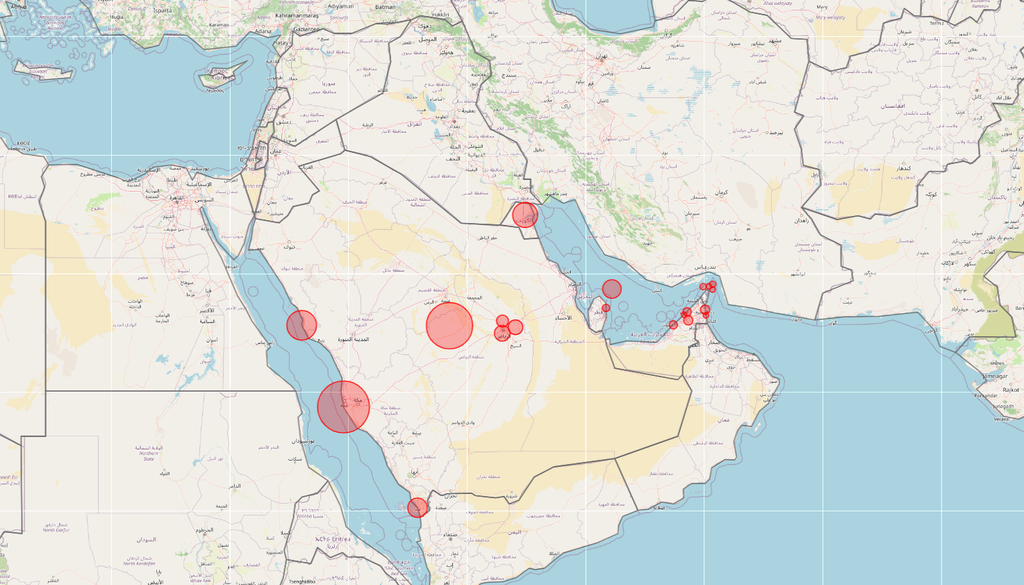
We have already spoken about the war in Iran heating up. Iran has been threatening the civilian, economic, and military infrastructure of countries that host American troops. Threatening a country’s sovereignty because it hosts foreign troops is the first step toward expanding Iranian bases across the Middle East. I wonder what will happen to MBS after this happens. But Iran is effectively leveraging its proxies in Iraq and Yemen to attack the GCC and even the US does not appear to be able to stop attacks on civilians. Plus Iran has bombed multiple tankers going through the Strait of Hormuz. This is not the peace loving nation that the media makes it out to be. Maybe now that the midterms are over, Congress will finally find a solution to this Iranian crisis.
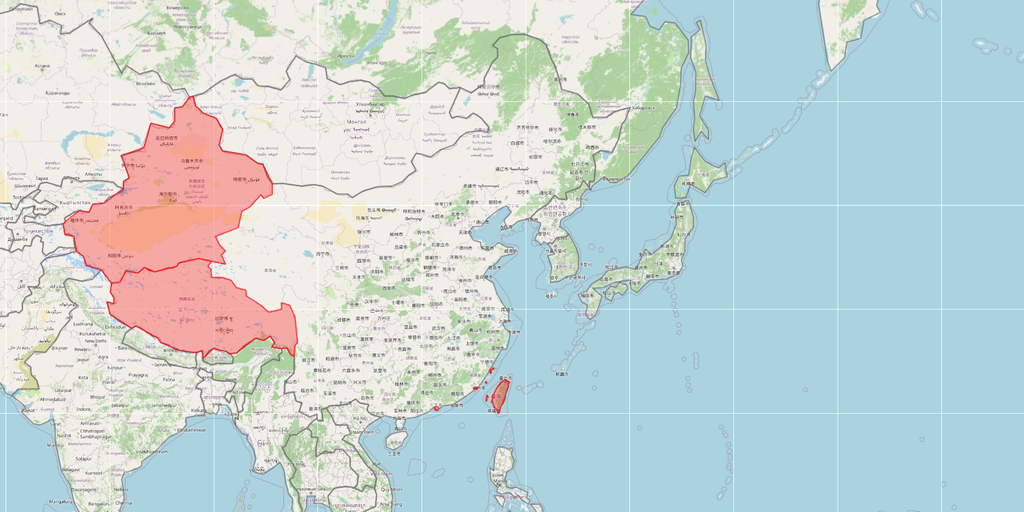
China has set a deadline of 2027 for Taiwan to rejoin the mainland. China has taken over East Turkistan, Tibet, Hong Kong, and will now eventually take over Taiwan. China was able to take over East Turkistan by inviting all the leaders to fly to China for negotiations. Once the single plane with all of the leaders crashed, China took over the country and planted its flag. In the early 2010s the population of the new “province” Xinjiang began to rebel after Han Chinese began arriving in droves. At that time it was already too late and riots were put down and Han Chinese quickly moved in. The same happened in Tibet while Hong Kong went substantially quieter once the British gave over the territory to the Chinese.

Now it’s Taiwan’s turn. The Chinese military has surrounded the main island and repeatedly made incursions into its territory. They have blocked off and harassed vessels leaving the west coast of the main island and are even threatening the eastern part of the island. They even had nameless drills around Taiwan last week so the media could not comment on them, dubbed the “Silent Intimidation” drills.
But make no mistake, China will take Taiwan by force. The stock market has probably not priced in what a catastrophe this would be on the US economy since most media organizations don’t report the harassment of the military actions of China. Make no mistake, this could bring America to its knees unless we get advanced tech manufacturing online in the US. Once China takes the island, they will have access to the world’s most advanced chip manufacturing facilities, as well as other advanced electronics. Let’s see what the stock market does after that.
“Tech Bubble”
Political commentators continue to say that the “tech bubble” burst and the economy was overdue for a “correction”. Economic analysts should know better. Earnings and revenue were stellar, full employment, and tech companies are still committed to envisioning the future by investing in American infrastructure. It’s true that building data centers across the US has its problems. All investments that are critical to the future creates both problems and solutions. But just as China invested in its manufacturing when it entered into the WTO in 2001, the US is building out its future with these investments so that the kids being born today can actually have good jobs in the future.
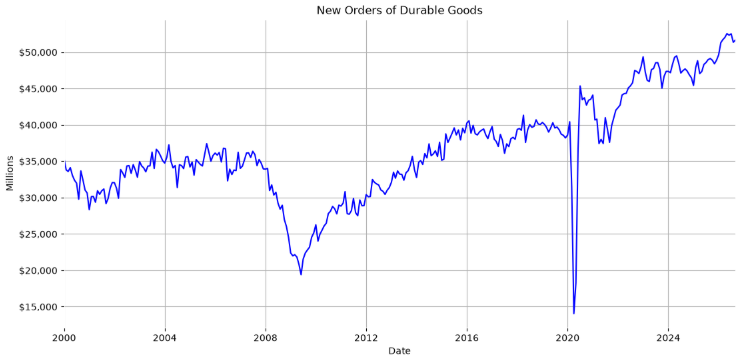
Tariffs may have raised prices on some goods and created havoc for PPI estimates but advanced manufacturing has roared back to life. We are starting to see a manufacturing boom that will likely last decades as companies are bringing back manufacturing to the US.
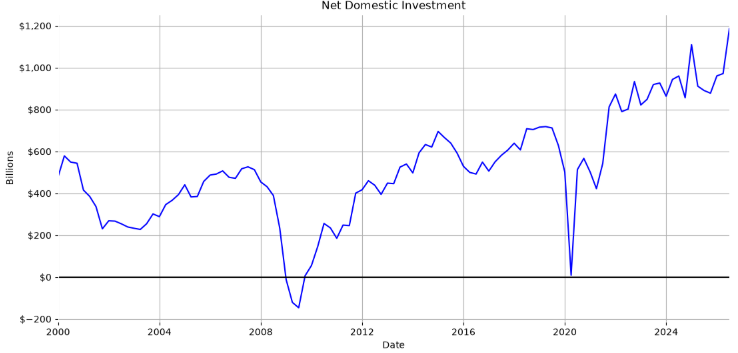
Investment in the US has reached an all time high and is spiking so much that it’s causing inflation both in the CPI and the PPI. If I had one chart to show how people will benefit from this in the future it would be this. Companies are investing in the US once again and we are currently riding a wave that shows no signs of stopping.
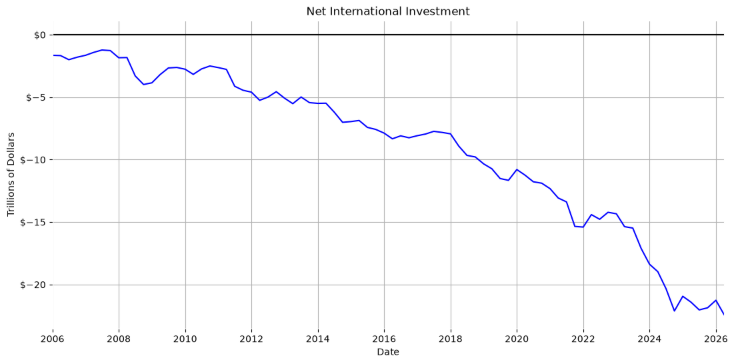
For the first time in years Net International Investments have finally bottomed out after having declined for so long! The graph above shows me that outflows of money to East Asia and Western Europe have finally started to slow. I can see this trend beginning to reverse if we can keep on track. I understand that fast growth can be scary and people are worried about the economy crashing but from what I see here, investments made by the tech companies and the overall economy show no signs in slowing down.
It is a concern that the debt tech companies are taking on will impact their bottom line in the future but they are investing in themselves rather than just doing the same thing day in, day out for decades and paying out dividends. There are no signs that this boom is slowing down and these companies are still making money.
The Lula Effect
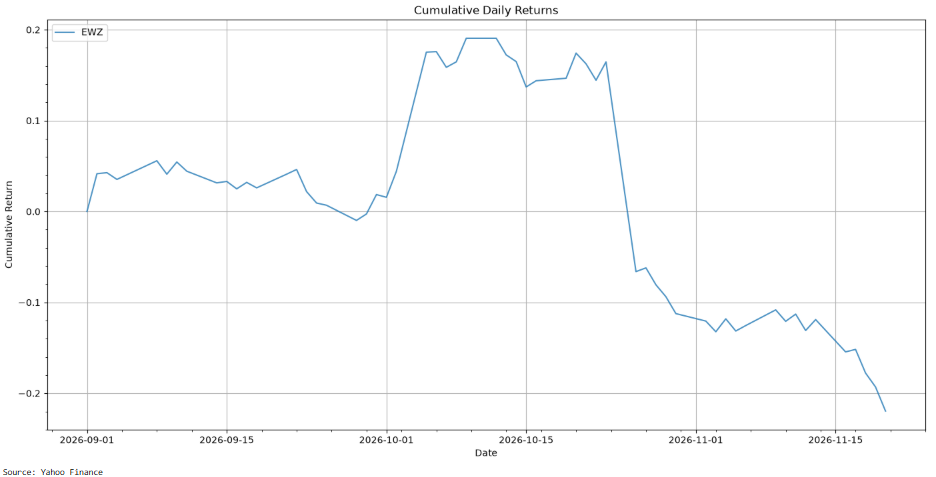
2026 brought a tense election in Brazil. Luiz Inácio Lula da Silva, otherwise known as Lula, was running against Flávio Bolsonaro after his father was sentenced to prison. Once Bolsonaro won the first round of elections, the economy cheered. The ETF that tracks the Brazilian stock market (EWZ) leapt 20%! It hovered at its peak waiting for the final runoff where it expected Bolsonaro to win. Once Lula won the final runoff by millions of votes, the market subsequently fell by over 30%.
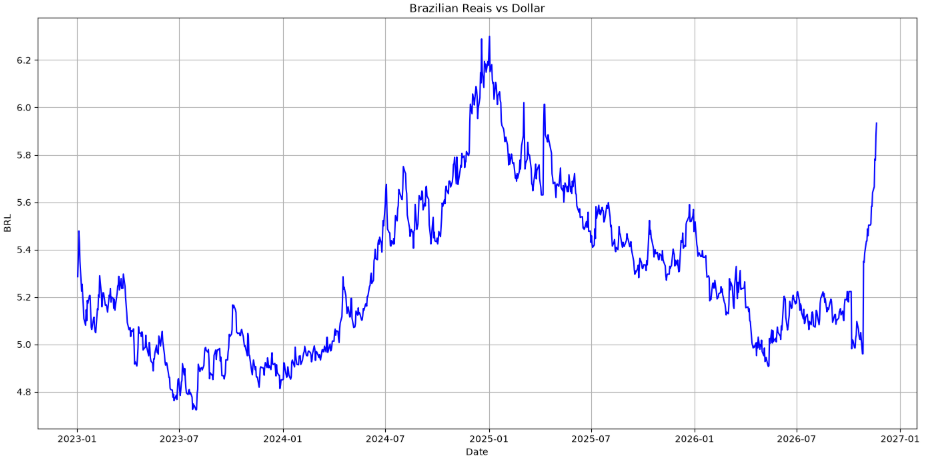
And it’s not just the stock market that has plunged in Brazil. Their currency is also struggling. The Brazilian Real has fallen 20% due to a lack of confidence in the current president. It’s as clear as day. No other factors influenced the economy at this time. Now we can look at historical context in the US trying to find similar events.
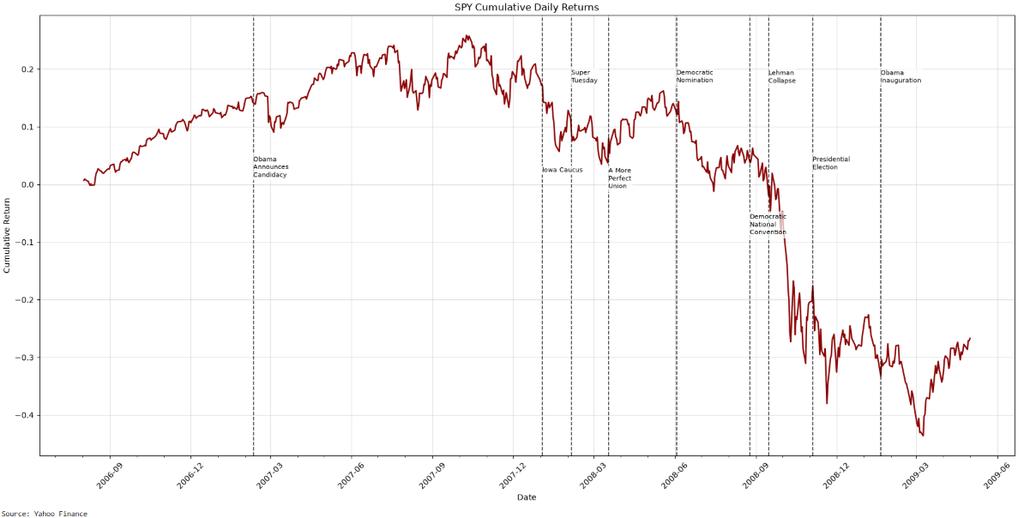
The 2008 financial panic had several causes. First and foremost, President Bush set out the “Homeownership Challenge” in 2002 to get 5.5 million new minority homeowners by the end of the decade. The American Dream Downpayment Act of 2003 was President Bush’s signature bill intended to provide $200 million per year to assist with low-income Americans when buying houses. This legislation’s aim was to help 40,000 American families annually buy their first home. That’s fucking nice of him.
This did cause the housing market to boom in 2003 and bottom out in 2006 and eventually to collapse the economy in 2008. The banks covered these loans and when people stopped spending, they stopped gaining employment and started living on debt. Finally the entire system collapsed. But why did the economy collapse in 2008? Why not in 2006 or in 2009? If I were an investor in 2008, what would I invest in?
President Obama ran on several initiatives. He promised universal healthcare by overhauling the healthcare industry and creating a government alternative to health insurance. This would have hit the insurance companies hard so obviously I would have sold any stocks I had invested in.
Also he wanted a withdrawal from Afghanistan and Iraq so I wouldn’t invest in the defense sector. He wanted energy independence by investing in clean energy and reducing imports from the Middle East. The oil and gas sector would have been a great investment but clean energy was a risky investment because it was a new sector of the economy.
Real estate would be a tough investment as well since it was struggling with low sales. Plus I wouldn’t hold real estate if the person running for president wants to implement a 90-day moratorium on home foreclosures. I’ve seen that film and it’s called Pacific Heights. Great movie but Michael Keaton is insane.
Tech would have been the obvious choice at the time but people were still spooked by the Dot-Com bust only a few years ago. Manufacturing was being gutted by NAFTA and China. So where would someone put their money? Major investors cannot just risk someone’s pension or 401k by putting money into a sector the president explicitly runs on destroying or overhauling. You have no idea how that would turn out. Also you don’t know who will be the one overhauling the sector. Would it be a doctor overhauling the healthcare industry, a waitress, or a bus driver?
Flash forward to President Biden’s first run at the presidency. He was elected by a slim margin while Covid wreaked havoc across the economy. People were paid to stay home to avoid a super flu and the Democrats pushed to keep the economy closed as long as possible, at least until we had a vaccine that pharmaceutical companies announced they were not close to releasing. September 30th, 2020 Moderna told the Financial Times the company wouldn’t seek emergency authorization for the vaccine before the election and Pfizer made a statement on October 16th, 2020 to not apply for emergency authorization before the election.
The election was tense and was a nailbiter. Polls were neck and neck all the way until the end and several states were only won by a few thousand votes. The election was held on November 3rd, 2020 and President Biden was announced on Saturday November 7th, 2020. Pfizer announced Monday November 9th, 2020 at 6am before markets opened that the vaccine they created was highly effective. Moderna quickly followed suit. Seems strange they announce this immediately after the election when they could have done it a few days before.
The reason this is so critical to this argument is that this gave a giant boost to the economy. A vaccine for a “devastating” super flu that had shut them into their homes had finally been discovered. Just after the election. Once President Biden was in office he quickly drew down the General Account of the Treasury which had nearly $2 trillion in it. That combined with MOUNTAINS of debt and huge budget deficits created the worst inflation the country has seen since the 1980s. Inflation was so high, the country is still trying to get back to normal 6 years later.
All this being said, the Democrats were probably worried about a repeat of 2008 when President Obama was elected. They teamed up with the pharmaceutical industry to hold back a vaccine until after the election was over. Then President Biden rode that and a spending spree that would make the angels weep. This powered the economy and no lack of confidence could get in their way.
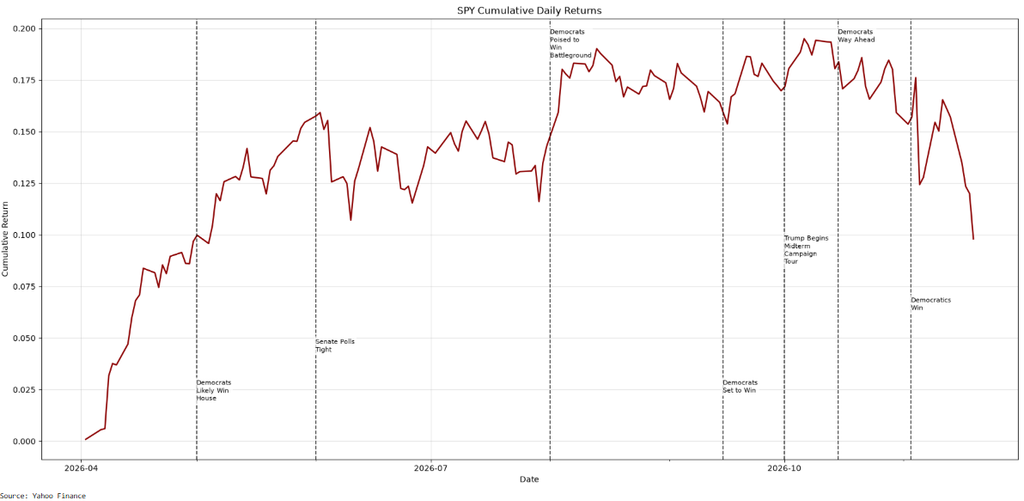
The 2026 midterms were fairly close at the beginning of the election. The polls for the generic ballot always favored the Democrats but no one ever expected the results to be so in favor of the Democrats. Between May and June the generic ballot was approximately 7% leaning toward the left but Senate battlegrounds were still pretty tight.
Towards the end of the summer, the polls covering the generic ballot remained the same but the polls began to favor the Democrats in battleground states. Then in September, the Senate polls started declaring that states like Ohio, Maine, and Texas were going to go blue. I didn’t believe it but that’s what they said.
Finally in October as early voting began, polling started leaning a bit more Republican as Trump began campaigning but this was not enough to stem the Democratic tidal wave that crushed the nation. The polls showed the Democrats’ lead widening at the end of October with NBC, Fox, Emerson, CNN all showing Democrats leading by up to 10 points and Republican strongholds going completely blue by nearly 9%.
Some of the campaign issues that the Democrats ran on were Medicare For All, prosecuting President Trump, stopping the war in Iran which would directly lead to Iran getting nuclear weapons and taking control of the Middle East, reducing energy prices, reducing home prices, abolishing ICE, ending data center construction, and raising the federal minimum wage.
While the Democratic Socialists of America do have some good points, they are terrible for the stock market. Medicare For All is the antithesis of investment in the healthcare industry. If they are going to wake up one day and completely overhaul a $5 trillion industry there is no telling how those changes will affect companies. I think everyone believes that the healthcare industry badly needs an overhaul but drastic changes will leave millions out of work.
Ending the Iran war will help millions in the Middle East. But allowing Iran to continue to use its proxies to attack civilians and blowing up ships only creates a worse life for the people in the region. And allowing Iran to take over the Middle East will lead to a lot more deaths than fixing the problems in the Middle East. Not to mention, when the Democrats start using their investigative powers to investigate military contractors it could prevent an overhaul the defense sector badly needs.
The quickest way to bring down energy prices in the US is to stop exports. The US is an export juggernaut when it comes to energy. Stopping these exports will crush diesel prices but we are actually good at exporting something so let’s go and make sure we wreck that industry. That way we can crush this country.
The tech industry is dragging America through an unparalleled overhaul of its infrastructure by upgrading its servers and building data centers. We need this change to be more competitive in the future and these pain points will prevent America from becoming the next Europe. Preventing these upgrades is shortsighted at best.
Imagine being in a self driving vehicle and it cannot process data quickly enough to not hit the car beside it. Or imagine being on an operating table while the doctor using a digital tool has a 5 second lag. I am sorry for those people who have electrical interruptions or have to look at the dang things but we have to build out our infrastructure. Campaigning on this does drive down GOOGL and META stock prices by (30%) but it doesn’t do much to help our future.
These deportations are so widespread and I would hate for someone to live in fear but with the automation in the United States, I really don’t see where the jobs in the future will be. We cannot continue to add 5 million people a year similar to the end of President Biden’s term. We have self driving vehicles, drones that deliver goods, fully automated fast food franchises, drones that can replace security guards, and machines that can mow your lawn. And it’s not just low wage jobs that can be replaced. There are automated drilling rigs, SI can replace the majority of accountants, lawyers (thank God), welders, and almost all white collar jobs. If this is true should we really add millions of people to our population.
And yes the bottom half really do need a bump in the federal minimum wage. It was already too low before inflation took off and now making $7/hour is almost comical. So maybe the Democrats taking over is not all that bad but reducing home prices like in the 2008 financial crisis, crushing companies in the middle of a once in a generation overhaul of its infrastructure, ending the careers of some of the most successful CEOs in our history, or making drastic changes to massive industries overnight does not inspire a lot of confidence and that is what the stock market is showing right now.