
The Middle East is entering a period of heightened instability as Iran expands its regional influence through Iraq and Yemen, threatening critical oil infrastructure and the global shipping routes that underpin the world economy. Despite the dramatic decline in oil prices following the US election, the underlying fundamentals remain extremely tight, while America’s diminishing presence raises questions about whether its regional allies can withstand sustained Iranian pressure. With Saudi Arabia scrambling to build new security partnerships, Turkey pursuing its own regional ambitions, and Israel facing a potentially new political direction without a fundamental change in its security objectives, the region appears headed toward a prolonged struggle for power that could reshape global energy markets and geopolitical alliances.
November’s election brought hope that the war in the Middle East would be resolved through diplomatic negotiation that would benefit Iran and ease tensions in the region. To strengthen Iran’s negotiating position, elections in Israel were undecisive but led to a path for a coalition to replace Netanyahu. But Iran is still laying mines in the “prohibited southern route” of the Strait of Hormuz which Iran does not control, and has blown up tankers in recent days in the strait. Iran also flew Quds Force members into Yemen in recent weeks, which has allowed the Houthi rebels to make startling military gains across the country and now control the Bab el Mar Strait. Oil fundamentals have not changed, and the blockade of Iran has not been lifted, potentially lifting oil and gas prices. All the while, Iran continues to gain a startling amount of influence across the region which will allow it to control the flow of oil and gas around the world.
The dramatic change in oil prices stands in stark contrast to the relatively little change in underlying fundamentals. DUC inventories are still at an all time low, SPR inventories are lower than they have been in decades, diesel and gasoline prices are at records although inventories will likely be built in the next few months as refineries are coming out of turnaround, and US exports are still at record highs but have done little to calm the market. Even rig counts have yet to show meaningful increases. Frac spreads are going up and more oil is leaving the Gulf than before the Iran war but now that Iran is attacking and sinking VLCCs, the plunge in oil prices looks temporary which will further weigh on the broader economy. With global inventories already approaching critically low levels, the apparent optimism in oil markets may prove short-lived, particularly if the conflict continues.
If Iran were to take swaths of the Middle East now, they could leverage their control over oil and gas for the rest of the world. Along with Russia, they would control almost the entire world’s crude supply. This is why the Middle East is such a strategic region right now and Iran appears to be gaining ground all over the place while the US is attempting to put a lid on Iranian influence.
Market Reaction to Democrat Win
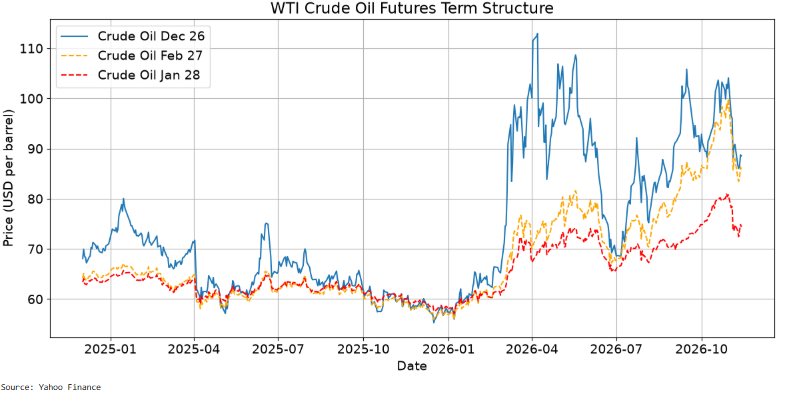
Current month and front month oil prices reacted to the Democrat’s decisive win in November 2026 by collapsing $20/barrel for both the current month and front month. Even 1 year futures dropped nearly $10/barrel once results were announced. This was on the hopes that the Democrats, who are more supportive of Iran, would give Iran a better hand in dealing with President Trump. The market’s initial expectations are that the Democrats will embolden Iran’s behavior through the Middle East and will allow it to project its influence and destabilize any country that gets in its way.
It’s interesting that the market for crude collapsed even while Iran has been attacking ships in the Strait of Hormuz in recent days. Iranian rebel forces are gaining ground quickly in Yemen, American troops have now fully pulled out of Iraq (including the green zone) and Iran is continually attacking Saudi Arabia’s civilian infrastructure. All the while crude prices remain $20/barrel lower than they were before. Any one of these actions would drive crude above $100/bbls, especially with worldwide inventories this low.
United States
The Democrats campaigned heavily in Iran’s favor. They appear to turn a blind eye to Iran’s lack of women’s rights, killing of over 30,000 protestors, attacks on civilians across the Middle East, sponsorship of terrorist groups, support for dictators that leave mass graves in their wake, topple governments, assassination attempts, and continued hacking of European and American companies. Can you imagine if America killed one protestor? It would be all over the news for weeks. It appears that the Democrats actually want Iran to gain influence across the region and it’s likely they will gain the White House and both houses of Congress in the next election. Iran just has to wait quietly and fend off attacks from Israel and the US. But Iran cannot simply just sit quietly and enter into “serious” peace negotiations for a year.
To make matters more complicated, the USS Theodore Roosevelt has recently arrived in the Gulf. This carrier group has a relatively fresh crew on board compared with the crew of the USS Abraham Lincoln which was deployed in the Gulf for nearly 7 months. The crew on the USS Abraham Lincoln complained of the prolonged deployment in the news while they faced declining morale and shortages of fresh fruit and milk. With this new carrier group, President Trump would be able to project force against Iran while Netanyahu or his successor could be able to surgically strike Iran’s leadership and the new crew could fight against Iranian drones. This carrier group will be combat ready for a potential battle with China when they take Taiwan in 2027. This makes it unlikely that the conflicts around the Middle East will dissipate.
American troops fully pulled out of Iraq, again, and have fully evacuated the Green Zone in Baghdad. They continue to remain in Kuwait, Bahrain, Qatar, Jordan, Saudi Arabia, and the UAE. But Iran has announced that attacks will continue on peaceful countries as long as they hold American troops in violation of their sovereignty. America has very little ability to prevent random attacks on civilian targets throughout these countries as Iran has demonstrated with attacks on Saudi’s airports, UAE high-rises, and the Kuwait International Airport. If America were to bomb civilian infrastructure, it would be all over the news but Iran has the ability to bomb whatever it likes and these attacks never even make it into a headline.
Iran can keep up the pressure for years and it’s unclear how long the GCC will remain committed to its relationship with the US when it means they cannot get oil out of their countries and their citizens will face daily bombings. If the US were to pull out of the Middle East, it would hand Iran a major diplomatic victory that could allow it to control the entire region.
If Iran were to control the region, it could cut off supplies of crude, natural gas and refined products. It could hold European and Indian economies hostage, prevent India from exporting its goods to both the US and Europe as it could use Yemen as a springboard against ships, push refugees out of the region into the West, and control the wealth stashed in banks and vaults in the richest kingdoms. America is trying to prevent this from happening but it looks like it is losing influence across the region.
If President Trump wants to solve the Iranian problem once and for all, he has about 1 year to do it before election season starts up again and does not have the backing of Congress. Israel could launch attacks on Iran as they will likely be the next to go once America leaves the region but the potential new prime minister may be more focused on Gaza and Lebanon.
Iraq
Iraq has been flying under the radar recently in the Middle East as Iran, Yemen, Lebanon, Syria, Gaza, Israel, Saudi Arabia, the UAE, and Kuwait have all been grabbing the headlines. Jeezzzsssee
Iraq is still dealing with daily terrorist attacks by the remnants of ISIS, Turkish bombings in Kurdish held regions and the Iranian backed militias like the Popular Mobilization Forces or Kataib Hizbollah that came into the country during the war against ISIS and never disbanded.
If that were not enough for the country to handle, America completed its full withdrawal of troops from the country in September 2026 leaving emboldened neighbors and a new version of the Great Game to be played out over its territory.
Iraq has several reasons why a country would want to control it. First and foremost is its location in the Middle East. The country lies in the middle of the action and borders Saudi Arabia, Iran, Kuwait, Jordan, Syria, and Turkey. If you control Iraq, you can leverage its territory to launch clandestine attacks on every major power in the region. Also you can build cross border relationships and support dictators. Iran could support an uprising against the new Sunni leaders of Syria if it controlled all of Iraq.
Another benefit of holding Iraq is its population. Having a large Shia, Kurdish, and Sunni population makes it an attractive target for regional powers looking to incorporate people of their own faith or race. Turkey is worried that PKK militants will launch cross border attacks and be used as a home base similar to the Taliban across both Afghanistan and Pakistan. So Turkey has actually set up military bases across northern Iraq which allow it to project power and prevent the Kurds from forming an alliance across the many countries they inhabit.
The Sunnis are spread across southern Iraq and were deposed during the fall of Saddam Hussein. Ethnic cleansing ensued in Baghdad while the Triangle of Death launched attacks on US troops. After US troops left Iraq the first time in 2010, ISIS took over large swaths of Iraq and Syria. Iranian backs militias like Hizbollah, the Popular Mobilization Forces or Kataib Hizbollah (which is different from Hizbollah). Hizbollah eventually tapped out of the fight against ISIS while the PMF and Kataib Hizbollah continued fighting with US forces. Once the war was over these groups spread across Sunni regions of Iraq and diluted the population of eastern Iraq.
Plus if Iran were to gain control over Iraq, it could leverage the country’s financial system, oil and gas infrastructure, and extensive energy reserves to circumvent international sanctions and strengthen its regional position. Control over Iraq’s banking system would provide additional channels for moving money, financing regional proxies, and conducting international trade outside the reach of Western financial restrictions. Its control over the country’s oil and gas infrastructure would also provide Iran with greater flexibility to export energy, redirect supplies, and generate revenue through channels that would otherwise be difficult to access. This is not even considering Iraq’s substantial oil and natural gas deposits, which would give Iran access to additional resources and further consolidate its influence over global energy markets. Their financial system and oil and gas infrastructure to evade sanctions. This is not even mentioning the oil and gas deposits throughout the country. FUCK.
Yemen
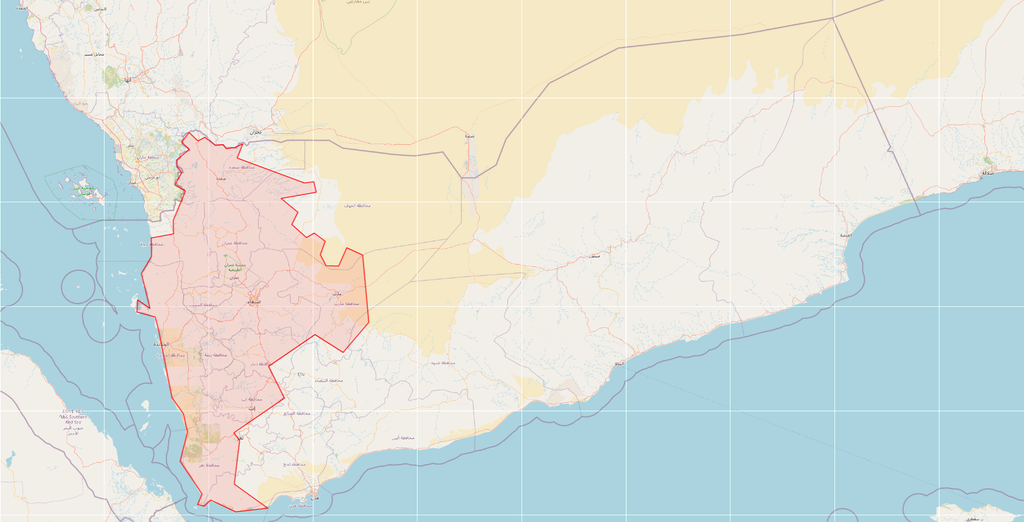
Iran’s proxies in Yemen have made startling gains against the government in recent days. Houthi forces have pushed past government lines in the south of the country to take the Bab el Mar Strait as well as surround the city of Taiz. This is worrisome because now Iran can control the strait and deny US and European vessels access to the Suez Canal which adds days to the journey between Europe and India or China. Not only that, it gives the Iranian proxies even more space to attack Saudi’s oil and gas as well as civilian infrastructure. Recently the Houthis have bombed civilian airports, the office of Saudi Aramco, the East-West pipeline and several cities in the western regions of the Kingdom of Saudi Arabia.
If America pulls out of the Middle East, it gives Iran the ability to not only take all of Yemen but also launch ground troops across the vast and indefensible border potentially creating a two front war for Saudi Arabia, not counting the PMF in Iraq. Saudi has few defenses against this kind of intrusion and has attempted to enlist the help of Egypt, Pakistan, and Turkey through a defense pact.
Saudi Partners
Egypt has indicated they will send forces to Saudi Arabia to help defend the country. It’s unknown how helpful these troops will be since the last war Egypt fought was against Israel in 1973 while Iran has been participating in almost continuous warfare since the inception of the country. The mullahs overthrew the Shah in 1979 and Iraq quickly attacked the country while the military was being gutted. This war lasted for 8 years with Iran steadily gaining territory in Iraq before signing a peace deal. All the while Iran was backing Hizbollah in Lebanon and Hamas in Gaza. Meanwhile, Egypt has not fought a war or even an insurgency in over 50 years.
Pakistan may be an unreliable partner as it’s also struggling with a deteriorating border with Afghanistan. Pakistan, which once harbored the Afghan Taliban while the US fought for 20 years against the insurgency, is now dealing with an insurgency of its own making. This insurgency has now turned against Pakistan which has been struggling in dealing with terror groups that are now getting safe haven in Afghanistan. Afghanistan for its part has said that the Durand Line is just a line which suggests that they could attempt to take the Federally Administered Tribal Areas of Pakistan. If Pakistan pushes back too much against Afghanistan and attacks Iran, Iran could simply leverage the Shia and Balochi minority populations to rise up and Pakistan would be fighting a three front war within its own country. All while being financed and coordinated by Iran which has shown its success in Yemen, Lebanon, Gaza and Iraq.
Turkey would be a formidable opponent for Iran. Turkey is the second largest NATO power and a regional powerhouse. Turkey has been getting weapons and its troops have been getting training from the US all the while fighting a relatively subdued insurgency in the Kurdish areas. Turkey has also shown themselves capable of coordinating large insurgent groups of their own and toppling the Syrian regime in 2024. Turkey could also call on their partners in Azerbaijan to take the northern region of Iran which is primarily populated by Azeris. But their ambitions are substantially larger than just defending the GCC countries from Iran. They may not stop at Saudi’s borders and will likely begin to rebuild the Ottoman Empire. This goal would come into conflict with Iran’s attempt to rebuild the Persian Empire throughout the Middle East which may be a better alternative.
Last but not least is the United States. For decades the fate of the Saudi royal family and the United States have been intertwined. Saudi Arabia has leveraged America’s oil and gas expertise as well as its military to defend the kingdom while also leveraging its contacts around the region. But the rise of the Democrats and their sympathy for Iran, despite the civilian massacre in Israel, their atrocious women’s rights record, supporting the oppressive regime in Syria, and destabilizing Lebanon could force the Saudis to change tactics and MBS could appeal more toward Iran. And while Saudi Arabia and the United States will likely continue to be partners, the US may be more distracted by China’s pending invasion of Taiwan to do any real help in the Middle East against multiple insurgencies simultaneously.
Israel
Israel went to the polls in October 2026 to elect the 26th Knesset. The final results of the election represented a fragmented society made of several coalitions with similar goals. Netanyahu’s bloc consists of Likud which is led by Netanyahu but also incorporates United Torah Judaism and Shas which are ultra-orthodox parties, Otzma Yehudit which is led by the National Security Minister, and Religious Zionism which is led by the Finance Minister. But Netanyahu is 8 seats short of a majority of 61 seats in the Knesset.
The opposition bloc is led by former IDF Chief of Staff Gadi Eisenkot’s Yashar party. This block is made up of Yashar, Be’Yahad a centrist party, the Democrats which is a liberal party, and Yisrael Beiteinu which is very secularist and anti-clerical. This block won 48 seats and is also short of the 61 seats needed to form a government.
The Arab parties hold 19 seats which is a substantial gain of 9 seats before the election. Both blocs have expressed their refusal in cooperating with Arab parties with Netanyahu absolutely refuses to work with them and the opposition bloc saying they will not be part of the government.
The opposition bloc could woo the ultra-orthodox parties away from Netanyahu’s government by allowing them to not participate in mandatory military service. This would give them the votes they need to form a coalition and install Eisenkot as the new prime minister.
The rise of Eisenkot, who is a former military chief, would not force Israel out of Gaza, Lebanon or Iran. He will likely show STRONG continuity with Netanyahu’s foreign policy and may even ramp up conflicts on its borders and beyond.
Eisenkot has pledged to end Hamas’ control over Gaza within 18 months of being appointed prime minister. He may be more willing to make a deal with Hamas but no matter who is chosen as the new leader of Israel, Hamas is likely finished. He has also argued that Netanyahu was too soft on Hizbollah and will likely ramp up the campaign against the terrorist organization.
Iran may be the biggest change from Netanyahu. Eisenkot has criticized Netanyahu’s handling of the war against Iran and may try a more diplomatic solution. This will likely fail as Israel will dismantle Hamas and will likely be fighting Hizbollah for years. Also Iran is unlikely to give up their quest for nuclear weapons and President Trump will not give up pressure on the country as long as they continue working toward their goal of obtaining nuclear weapons.
No matter what happens, Eisenkot will probably be more at the mercy of global politics than he realizes and his stint as prime minister will likely resemble Netanyahu’s tenure more closely than he realizes.
Iran Weaknesses
While Iran is gaining ground in the Middle East, it is not without its weaknesses. The country’s economy and currency have been decimated even before the start of the recent war with the US. The Rial has been struggling for decades and Iran recently devalued the currency which still does not match the black market rate. The drought that is plaguing the country has dried up lakes and shows no signs of stopping. Protests whether, either organic or coordinated by the US and Israel, brought the largest challenge to the cleric’s rule since the Iranian revolution in 1979. It was so large that Iran actually KILLED up to 43,000 protestors in the streets. Just shot them in the streets. And they are still executing more people every day. 43,000. Imagine. Imagine if that happened in the US. You can’t even dig enough graves to fit all the young people in. THAT IS CRAZY.
A country could employ similar tactics that Iran has employed against the United States and back insurgents. It could be a struggle to contain but the war against ISIS in Syria and Iraq was so detrimental that Hizbollah actually had to back out of the fight. If someone were to sponsor a new Anbar Awakening against the PMF or Kataib Hizbollah, both of which are refusing to disarm as agreed upon in Iraq, Iran would have to devote precious resources to countering these disturbances. Though Iran would likely start digging more mass graves. It didn’t deter its support for the al-Assad in Syria.
Iran is also made up of substantially different ethnicities. One would assume that the Azeris would like split off and join Azerbaijan if they could do so without retribution. The same applies for Baluchistan which has actually seen recent flare-ups in violence though these people lie in the sparsely populated southern part of Iran. This, combined with insurgencies in Iraq and Israel’s wars in Lebanon and Gaza may be too much for the budding Persian Empire.
Another issue that Iran is dealing with now is its infrastructure. Trump has destroyed a lot of Iran’s infrastructure and will likely continue to strike at more infrastructure. Military installations, energy facilities, communications infrastructure, transportation infrastructure, desalination plants (while Iran is already short of water), industrial infrastructure have all been decimated. And President Trump is likely far from done. This cannot be rebuilt in a few years. Especially without an embargo on the country and the country suffering economically.
Iran is also building all-weather allies in the Middle East from scratch. Hamas looks like they will not be massacring kids in and raping women in Israel anytime soon but terrorist attacks in the West Bank occur almost daily which are not reported in the media. Hizbollah is on its back foot and was burying people like crazy during the war with ISIS but still has plenty of foot soldiers. The pager incident and their top leadership being taken out were not great for the terrorist organization but Iranian Quds Force stepped in to fill the leadership gap. Russia and China do not appear to be coming to the country’s aid either. Russia is stuck in its own quagmire while China appears to be content to sit back and sell weapons to Iran and study the tactics of the US before they wage their own war on Taiwan.